Composition
Arranging subjects and negative space inside the frame for balance, tension, and focus.
37 techniques
Architexture
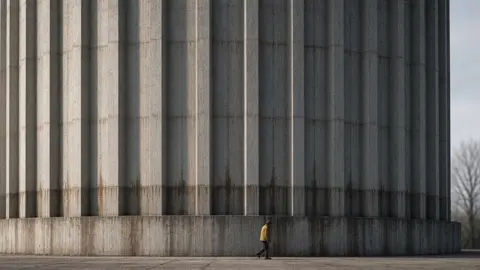
ArchitextureArchitectural mass, repeated modules and material texture dominate the composition; people mainly provide scale.
Asymmetry
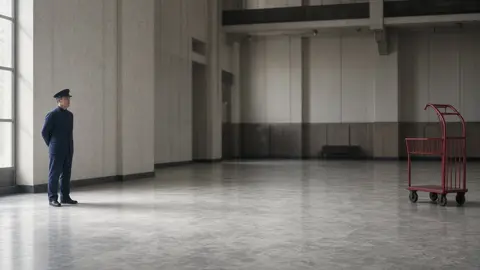
AsymmetryUnequal visual masses are deliberately balanced or put in tension without mirroring the frame.
Centered Composition
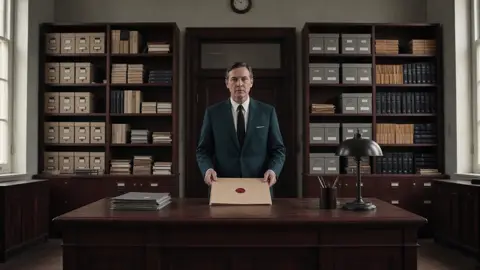
Centered CompositionThe subject and the surrounding visual organization share a dominant central axis, beyond merely centering a head.
Central Framing

Central FramingThe principal subject occupies the image center even if the surrounding environment is not symmetrically organized.
Clean Frame
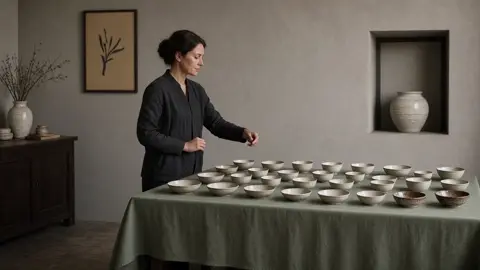
Clean FrameForeground obstructions and unintended edge intrusions are excluded while the intentional set can remain fully dressed.
Deep Space

Deep SpaceBlocking uses measurable near, middle and far distances so action travels through a legible three-dimensional environment.
Diagonal Composition
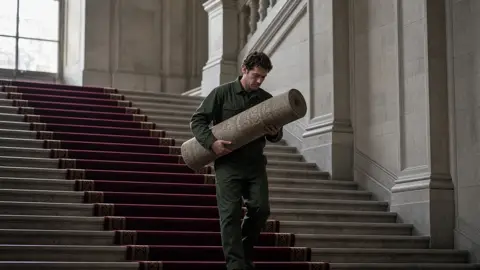
Diagonal CompositionStrong sloping lines within the scene organize the image while the camera horizon may remain level.
Dirty Frame

Dirty FrameDeliberate nearby obstructions occupy frame edges, situating the viewer inside a crowded or partly concealed viewpoint.
Figure-Ground

Figure-GroundThe main form separates from its background through value, color, focus or contour rather than arbitrary glow.
Foreground Interest

Foreground InterestA meaningful near object establishes viewpoint and depth without unintentionally blocking the principal action.
Frame within a Frame
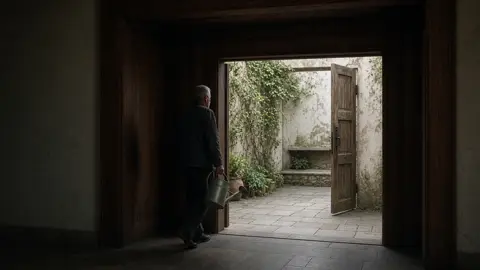
Frame within a FrameAn architectural opening forms a second visible border that contains and relates to the subject.
Frame within Frame

Frame within FrameA real opening inside the image encloses a smaller composition while preserving the space between both frames.
Golden Ratio

Golden RatioA phi-based composition places important divisions near 38.2 and 61.8 percent, or uses an actual readable spiral path.
Head Room

Head RoomHeadroom is the vertical gap from the top of the subject's hair or headwear to the upper frame boundary.
Headroom
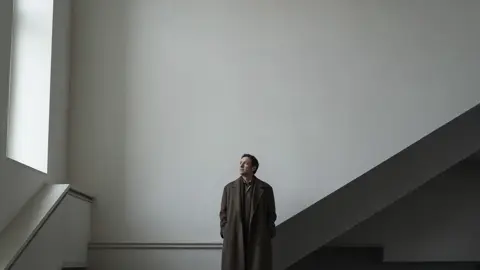
HeadroomDeliberately changing the space above a head can make surrounding architecture dominate a portrait.
Layered Depth
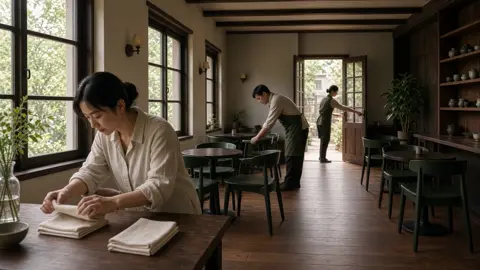
Layered DepthMeaningful activity or objects occupy separate near, middle and far planes that can be read together.
Lead Room

Lead RoomMore frame space is reserved ahead of a subject's movement or orientation than behind it.
Leading Lines

Leading LinesActual scene edges guide attention toward a chosen subject or destination, without requiring a complete one-point perspective construction.
Look Space

Look SpaceThe framing reserves space in the direction of a subject's gaze, establishing an implied offscreen target.
Negative Space

Negative SpaceA deliberately unoccupied area becomes a major compositional mass while still belonging to a recognizable location.
One-Point Perspective
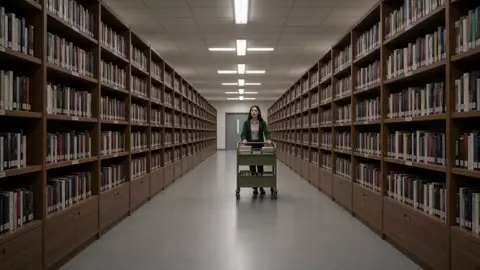
One-Point PerspectiveDominant receding parallel lines converge toward one shared vanishing point while front-facing planes stay square.
Reflections
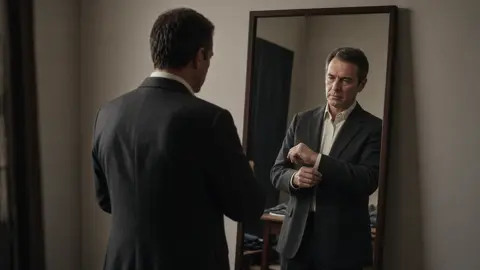
ReflectionsA reflective surface creates a second view whose geometry and movement remain consistent with the subject and camera.
Repetition and Pattern
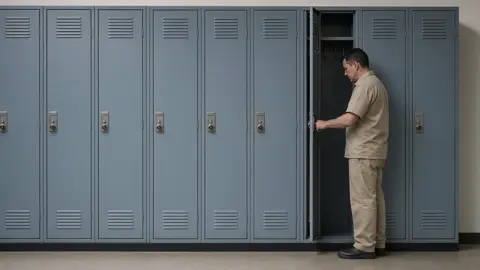
Repetition and PatternRepeated spatial units establish a visible rhythm, making a deliberate exception perceptually important.
Rule of Thirds

Rule of ThirdsImportant features are placed near the lines or intersections of a three-by-three image division.
Screen in Screen

Screen in ScreenA legible recorded or live image is nested inside a physical display within the larger scene.
Shallow Space

Shallow SpaceStaging and viewpoint minimize depth cues so figures and objects read as a flatter arrangement near the picture plane.
Short Siding

Short SidingThe subject looks toward the nearby frame edge while most unused space is left behind the head.
Symmetry
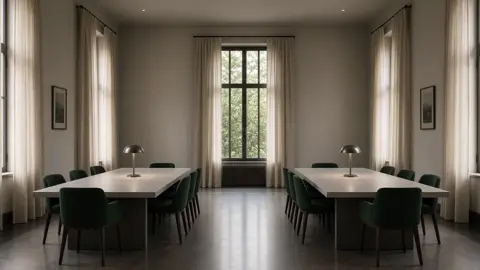
SymmetryCorresponding masses on either side of an axis create a mirrored spatial organization, with or without a central subject.
Tableau

TableauA sustained composed arrangement lets the viewer inspect multiple relationships without fragmenting them into coverage.
Tonal Contrast
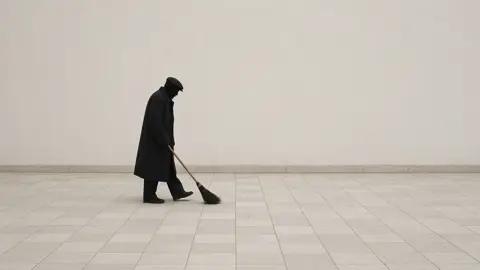
Tonal ContrastThe placement of bright and dark masses organizes attention independently of a particular lighting style.
Triangles

TrianglesThree selected visual masses form clear vertices that guide attention through a triangular relationship.
Triangular Composition

Triangular CompositionThree major forms are staged as a triangular structure whose apex and base can express hierarchy.
Vanishing Point
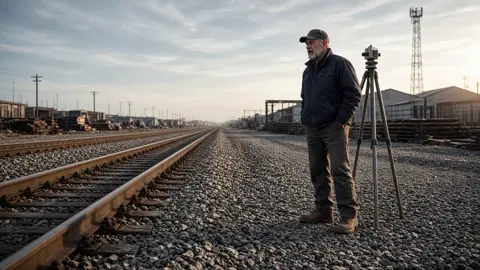
Vanishing PointThe composition chooses the image location where a family of receding parallel lines appears to meet.
Visual Weight

Visual WeightSize, brightness, color, focus and motion are managed so particular masses dominate attention at chosen moments.
Void
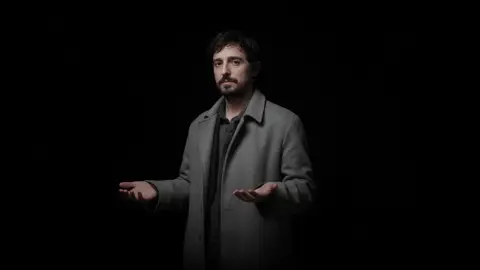
VoidA featureless field removes recognizable environmental coordinates so the subject appears against no readable place.
Voyeur
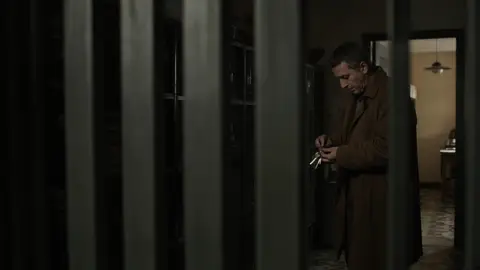
VoyeurA concealed, obstructed viewpoint implies watching a subject who is not presenting to the camera.
Windows
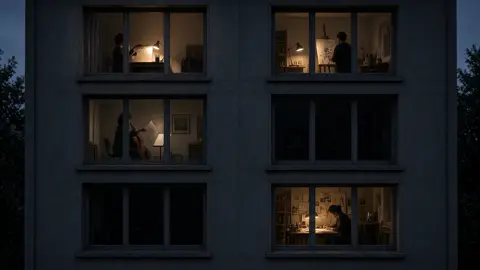
WindowsMultiple architectural window cells carry separate readable activity, making the grid itself the organizing subject.